
Modern Office Furniture Ideas for Efficient Offices
Efficient offices depend on furniture that supports how people actually work — collaborating in clusters, focusing alone, moving between tasks, and sharing desks across shifts. Modern office furniture ideas have moved well beyond rows of identical desks, offering configurations that reduce wasted space, improve ergonomic comfort, and make the most of every square metre available to growing teams.
Configurations That Improve Productivity
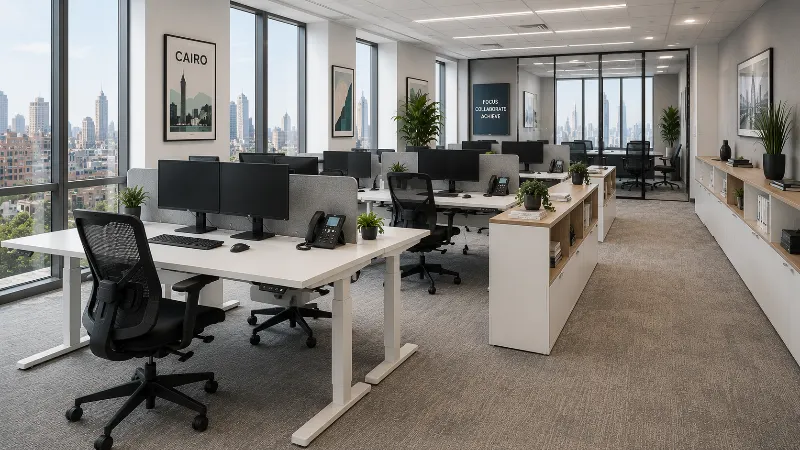
The layout of workstations shapes how easily teams communicate and how well individuals concentrate. Bench desks work for collaborative teams that share information frequently. L-shaped workstations suit analysts and finance staff who need spread across multiple documents or screens simultaneously. Cluster arrangements of four seats work well for sales and account management teams that need quick face-to-face discussion without crossing the room.
- Use bench desks in rows of four for support and monitoring teams that share information frequently.
- Install L-shaped desks for analyst roles requiring dual monitors and physical document spread.
- Choose cross-cluster configurations for sales teams to encourage fast, informal collaboration.
- Add height-adjustable frames to any configuration where staff prefer to alternate between sitting and standing.
- Keep a clear aisle of at least 1.2 metres between workstation rows to allow comfortable through-movement.
Choosing the Right Chair for Each Role
Chair specification is the single most important ergonomic decision in any office fit-out. The table below matches common office roles with the chair features that serve them best across a working day.
| Role Type | Recommended Chair Feature | Priority |
|---|---|---|
| Operations / monitoring | 24-hour rated, class-4 gas lift | Shift durability |
| Finance / analyst | Lumbar support, armrest height adjust | Posture support |
| Creative / design | Flexible tilt, breathable mesh back | Freedom of movement |
“The most productive offices are not the most densely packed — they are the ones where each person can work without interruption, without discomfort, and without wasting time on a poorly arranged desk.”
Storage That Does Not Sacrifice Space
Efficient modern offices replace floor-to-ceiling cabinet walls with targeted storage: mobile pedestals under each desk, low credenzas behind workstation rows, and one bank of tall lockers along a single wall. This approach keeps the floor flexible as team sizes change and prevents the visual heaviness that makes older offices feel cramped and static.